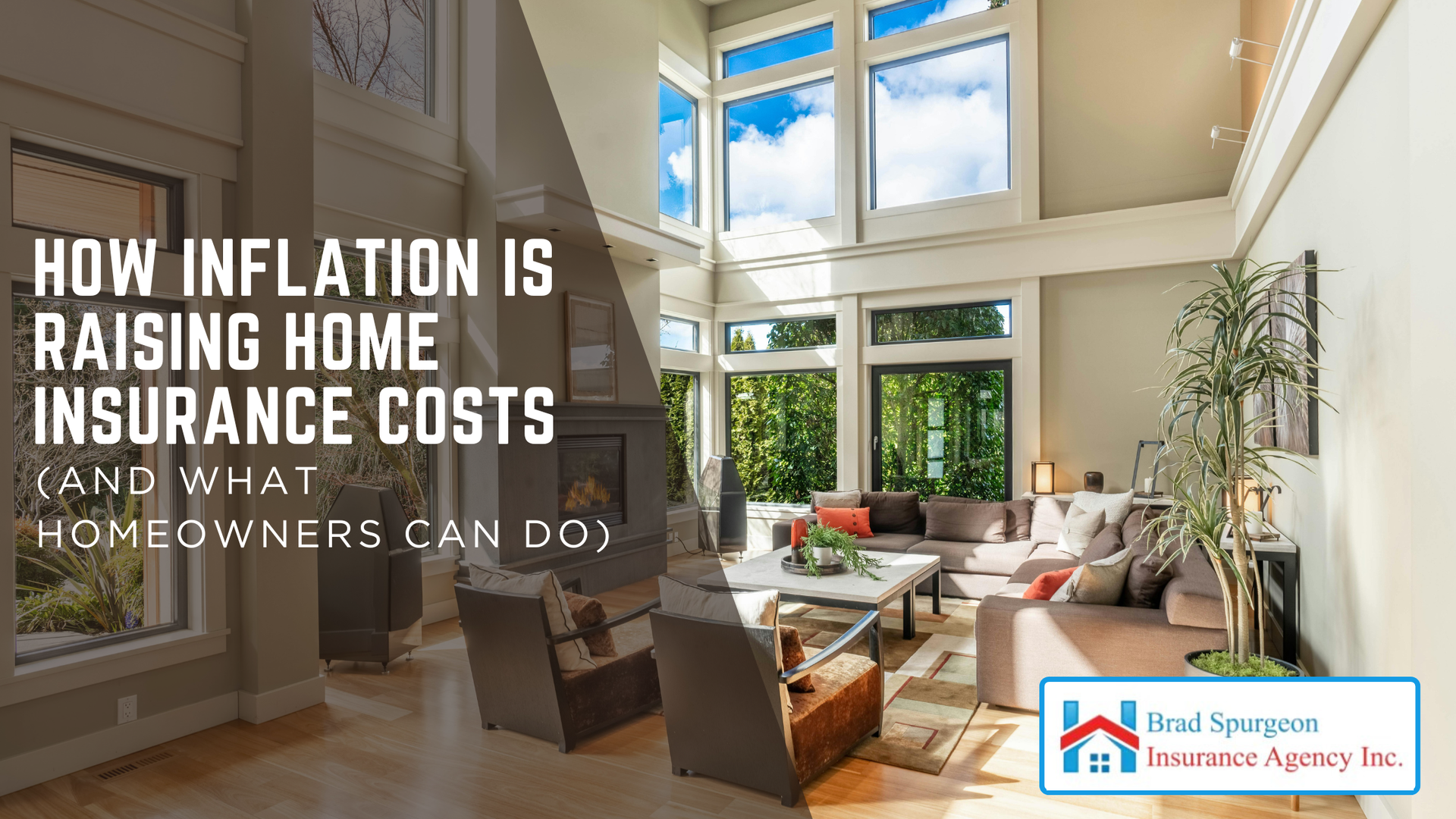
Inflation raises home insurance costs because it increases the price of labor, building materials, repairs, and replacement after a covered loss. When it costs more to rebuild a roof, replace flooring, restore water damage, or repair storm-related destruction, insurers usually adjust premiums and coverage calculations to reflect that higher risk. For many homeowners in Texas City, TX, the result is not just a higher renewal bill. It is also a need to review whether the policy still matches the home’s true rebuilding cost.
Why Inflation Affects Home Insurance So Directly
Home insurance is closely tied to replacement cost. That means the policy is not just pricing the home as it sits today. It is pricing the insurer’s potential cost to repair or rebuild it after a covered loss.
When inflation pushes up the cost of roofing materials, lumber, drywall, insulation, electrical work, plumbing parts, and contractor labor, the cost of claims rises too. That creates pressure on the insurance side in two ways. First, insurers may need to pay more for covered losses. Second, homeowners may need higher dwelling limits to avoid being underinsured.
In our work with homeowners, a common issue we see is that people think inflation only matters when buying groceries or paying contractors directly. But inflation also changes the insurance math behind every major property claim. If the home costs more to rebuild, the policy often needs to reflect that reality.
How Higher Material Costs Show Up In Your Premium
One of the clearest ways inflation affects
homeowners insurance is through construction materials. Even when a house has not changed physically, the cost to restore it after damage may be much higher than it was a few years ago.
That can affect:
- Roof replacement costs
- Siding and exterior repair
- Flooring replacement
- Cabinetry and interior finish work
- Electrical and plumbing repairs
- Debris removal and cleanup
A common misunderstanding is that if the home has not been renovated or expanded, the policy should cost roughly the same every year. But insurance is based on the cost to replace what is there now, under current market conditions. If materials are up, the claim cost is up, and insurers respond accordingly.
Labor Inflation Matters Just As Much As Material Inflation
Homeowners often focus on materials, but labor inflation can be just as important. Skilled labor is a major part of any serious property repair, especially after storms, water damage, or fire loss. When contractors, roofers, electricians, and restoration crews charge more, insurance claim severity rises.
This matters because a large property claim is rarely just a materials bill. It is usually a combination of:
- Labor
- Materials
- Temporary protection or mitigation
- Cleanup and disposal
- Permit-related work
- Specialized trades
A common issue we see is that homeowners underestimate how much labor drives the final cost of a claim. Inflation in labor can turn what used to be a manageable repair estimate into a much more expensive one very quickly.
Why Inflation Can Lead To Higher Dwelling Limits
As inflation drives up rebuilding costs, insurers often reassess how much
coverage a home should carry. That can increase the dwelling limit on the policy, which may then increase the premium.
This is not always a sign that something is wrong with the policy. In many cases, it reflects an effort to keep the home insured at a more realistic replacement value. The real risk is when homeowners resist any increase in coverage without considering whether the home would still be adequately insured after a major loss.
That is where inflation becomes more than a pricing issue. It becomes a protection issue.
If a
home is insured at a limit that no longer reflects current rebuild costs, the homeowner may be more exposed than expected. A policy that looked adequate a few years ago may now be too tight.
Storm-Prone Areas Can Feel The Pressure Even More
Inflation affects every region, but the pressure can feel even stronger where weather-related claims are a regular concern. When repair demand rises after storms, costs can move even faster. Roofing demand, material shortages, and contractor scheduling pressure can all intensify after major weather events.
For homeowners near Galveston Bay or around Bay Street Park, this can be especially relevant. Wind-driven weather, coastal exposure, and storm repair demand can combine with inflation to push claim costs upward. In those settings, the issue is not only that materials cost more in general. It is that post-storm repair environments can become even more expensive than normal.
That is one reason some homeowners see both higher premiums and higher valuation adjustments at renewal.
Inflation Also Affects Contents And Other Structures
The house itself is not the only area affected. Inflation can also increase the cost to replace personal belongings and detached structures.
That may involve:
- Furniture
- Appliances
- Electronics
- Clothing
- Outdoor equipment
- Detached garages or sheds
- Fencing and other exterior features
A common issue we see is that
homeowners focus on the dwelling amount but ignore whether contents and other structures coverage still make sense. If the cost of replacing everyday property has climbed, those limits may deserve a closer look too.
Why Homeowners Sometimes Feel Premium Increases Are Random
From the homeowner’s perspective, renewal increases can feel abrupt or disconnected from personal claims history. But inflation is one reason the increase may happen even if the homeowner did not file a claim.
Insurance pricing is influenced not only by your individual loss record, but also by broader claim trends and projected replacement costs. If the market says homes are more expensive to rebuild and claims are more expensive to settle, carriers often adjust pricing and coverage assumptions across the board.
That does not mean every increase is purely inflation-related. But inflation is often one of the clearest underlying drivers.
What Homeowners Can Actually Do About It
Homeowners cannot control inflation, but they can respond to it intelligently. The goal is not just to lower premium at all costs. The goal is to keep the policy aligned with today’s rebuilding reality while avoiding unnecessary surprises.
A practical review should include:
- Checking whether the dwelling limit still looks realistic
- Reviewing contents and other structures limits
- Asking whether endorsements like extended replacement cost are available
- Reviewing the deductible to see if it still fits the household budget
- Updating the insurer about major improvements or changes
- Comparing options if current pricing has become difficult
A common issue we see is that people react to a higher premium by reducing
coverage first and asking questions second. That can create a dangerous gap. A better approach is to review what has changed, what the policy is trying to protect, and where adjustments can be made without weakening the coverage too much.
When A Policy Review Becomes Especially Important
Inflation-related reviews are especially important when:
- The home has not been reviewed in several years
- Major renovations were completed
- Building costs in the area have risen sharply
- The homeowner notices large renewal changes
- The home has unique features or older construction
- The policy has not been compared recently
For many homeowners in Texas City, TX, this is the point where an annual renewal stops being routine paperwork and becomes a real financial planning discussion. The question is not just, “Why did this cost go up?” It is, “If I had a serious loss tomorrow, would this policy still do what I think it should?”
Conclusion
Inflation raises
home insurance costs because it raises the cost of rebuilding, repairing, restoring, and replacing what a policy is designed to protect. Higher prices for labor, materials, and post-loss work push premiums upward and can also make older coverage limits less reliable than they once were. The smartest response is not to ignore those changes, but to review the policy carefully and make sure the protection still fits the home’s real replacement cost and the household’s financial risk.
At Brad Spurgeon Insurance Agency Inc., we aim to provide comprehensive insurance policies that make your life easier. We want to help you get insurance that fits your needs. You can get more information about our products and services by calling our agency at (409) 945-4746. Get your free quote today by CLICKING HERE.
Disclaimer: The information presented in this blog is intended for informational purposes only and should not be considered as professional advice. It is crucial to consult with a qualified insurance agent or professional for personalized advice tailored to your specific circumstances. They can provide expert guidance and help you make informed decisions regarding your insurance needs.
Brad Spurgeon Insurance Agency
Texas City, TX
(409) 945-4746
https://www.privatewindstorm.com/